

7 Ways to Turn Supplier Marketing Dollars Into Actual Sales—Without Increasing Your Marketing Budget
By Tim Rasmussen | Founder, Rivet|MRO
You may already have money available to market your business.
Many independent distributors have manufacturer relationships that include marketing funds, co-op dollars, MDF, promotional programs or other forms of supplier support.
Yet a surprising amount of that money goes unused.
And even when distributors use it, they don’t always use it strategically.
That’s a missed opportunity.
The objective isn’t simply to spend your co-op.
The objective is to use manufacturer resources to help accomplish something that matters to your business:
Generate demand.
Create leads.
Promote products.
Support salespeople.
Acquire customers.
Grow existing accounts.
Increase sales.
I’ve spent years working on both sides of the manufacturer/distributor relationship, and I’ve seen the same challenge repeatedly:
Manufacturers want their distributors to market their products.
Distributors want to grow their businesses.
But the two sides don’t always have the time, resources or marketing expertise to connect those objectives.
That’s where a well-managed co-op program can make a difference.
This guide will give you a practical framework for getting more from the manufacturer marketing resources already available to you.
1. STOP THINKING OF CO-OP AS “FREE MONEY”
The first mistake is thinking about co-op as money that needs to be spent.
Instead, think of it as a manufacturer-funded marketing resource.
That subtle change in perspective can completely change how you use it.
Ask: What are we trying to accomplish?
Then ask: Which manufacturers and products can help us accomplish it?
For example:
You want to grow your safety business.
Instead of asking: “Which manufacturers have co-op available?”
Ask: “Which safety manufacturers are important to our growth strategy, and what resources do they offer that could help us create demand?”
That may lead to:
- Email campaigns
- Product promotions
- Paid search
- Social campaigns
- Customer events
- Sales materials
- Landing pages
- Digital advertising
- Product videos
- Training
- Counter promotions
- Website content
The money isn’t the strategy. The business objective is the strategy.
Co-op is one of the resources that can help fund it.
2. FIND THE MONEY YOU’RE NOT USING
Before creating another marketing campaign, determine what is actually available.
Create a simple manufacturer co-op inventory.
For each major supplier, document:
| Manufacturer | Available Funds | Expiration | Eligible Activities | Reimbursement | Contact |
| Manufacturer A | $_____ | _____ | _____ | _____% | _____ |
| Manufacturer B | $_____ | _____ | _____ | _____% | _____ |
| Manufacturer C | $_____ | _____ | _____ | _____% | _____ |
Don’t stop with the manufacturers you currently use.
Ask your sales team: “Which manufacturers are important to us that we aren’t currently doing marketing with?”
There may be opportunities hiding in those relationships.
Also ask manufacturers directly:
- What co-op programs are currently available?
- How much funding do we have?
- What qualifies?
- What is the reimbursement percentage?
- What is the deadline?
- Are there pre-approval requirements?
- Can unused funds roll over?
- Are digital campaigns eligible?
- Can we use funds for lead generation?
- Are there new programs we haven’t been told about?
One of the simplest opportunities:
Ask. Manufacturers change programs, budgets and requirements.
If you haven’t reviewed your programs recently, you may not know what’s available.
3. DON’T LET THE MANUFACTURER’S MARKETING PLAN BECOME YOUR MARKETING PLAN
Manufacturers naturally want to promote their products.
You naturally want to grow your business.
Those objectives can overlap—but they aren’t always identical.
A manufacturer might want to promote: Product X
You might actually need: More customers in a specific market segment.
Those aren’t necessarily the same marketing objective.
The best distributor/manufacturer programs find the intersection.
Example
A manufacturer wants to promote a new product.
Instead of simply putting the manufacturer’s product sheet on your website, consider building a campaign around a customer problem:
“5 Ways to Improve Workplace Protection in High-Risk Applications”
The manufacturer’s product becomes part of the solution. Your distributor becomes the resource.
The customer gets useful information. And the manufacturer gets product exposure.
That’s a much more powerful use of co-op.
4. CONNECT CO-OP TO YOUR SALES PRIORITIES
Your marketing should support your sales strategy.
Before deciding what to spend co-op on, identify your priorities.
Ask your sales leaders: Where do we want to grow?
- New customers?
- Existing customers?
- Specific industries?
- Specific geographic markets?
- Specific product categories?
- Specific manufacturers?
- Higher-margin products?
- New product introductions?
Then identify which manufacturer relationships can help.
A simple framework:
BUSINESS PRIORITY: What are we trying to grow?
↓
MANUFACTURER: Which supplier relationships support that objective?
↓
CO-OP: What resources are available?
↓
MARKETING: What campaign can create demand?
↓
SALES: How will we follow up?
↓
MEASUREMENT: What happened?
This is the connection many distributor marketing programs are missing.
5. MAKE YOUR CO-OP DO MORE THAN ONE THING
One campaign can often accomplish multiple objectives.
For example, suppose you’re promoting a manufacturer’s safety products.
A single campaign could include:
Email: Promote the product category to existing customers.
Landing Page: Create a dedicated destination for the campaign.
SEO: Reach customers actively searching for solutions.
Social Content: Extend the campaign’s reach.
Sales Enablement: Give salespeople a simple follow-up resource.
Lead Capture: Capture prospects who aren’t ready to buy immediately.
Manufacturer Reporting: Document the activity and results for co-op reimbursement.
Instead of thinking: “We need to spend $5,000.”
Think: “How can we build a $5,000 campaign that creates multiple marketing and sales assets?”
The goal is leverage.
6. DON’T FORGET THE SALES TEAM
One of the biggest gaps in distributor marketing is the handoff between marketing and sales.
Marketing generates activity. Sales is expected to do something with it.
But nobody tells the salesperson what to do next.
Every campaign should answer:
- Who is the prospect?
- What did they respond to?
- What should the salesperson say?
- What is the next step?
For example:
A customer downloads a guide about respiratory protection.
Don’t simply put the lead into a database.
Give the salesperson a reason to call: “I saw that you downloaded our respiratory protection guide. We’re working with several customers in your industry on this right now. Are you reviewing your current program?”
That’s a sales conversation.
Marketing created the reason to call.
Sales creates the opportunity.
Co-op should help fund both sides of that equation.
7. MEASURE BUSINESS RESULTS—NOT JUST MARKETING ACTIVITY
This may be the most important principle in the entire guide.
A campaign can generate:
- Impressions
- Clicks
- Opens
- Likes
- Website traffic
- Downloads
…and still produce no business.
Those numbers can be useful. But they’re not the finish line.
The ultimate question is: Did the marketing help the business?
Depending on the campaign, measure:
Marketing
- Reach
- Clicks
- Engagement
- Website visits
- Leads
- Downloads
Sales
- Qualified leads
- Opportunities
- Quotes
- New accounts
- Sales calls
- Pipeline
Business
- Revenue
- Gross margin
- New customers
- Repeat purchases
- Return on marketing investment
You don’t need a sophisticated attribution system to start.
Even a simple campaign tracker can tell you more than simply reporting impressions.
THE CO-OP HEALTH CHECK
Use this quick assessment to evaluate your current manufacturer co-op program.
For each question, answer Yes / No / Not Sure.
FUNDING
☐ Do we know which manufacturers offer co-op?
☐ Do we know how much funding is available?
☐ Do we know when funds expire?
☐ Do we understand reimbursement requirements?
STRATEGY
☐ Do we have a marketing plan for our major manufacturers?
☐ Are our co-op programs connected to our sales priorities?
☐ Are we choosing campaigns based on business objectives rather than simply available funds?
EXECUTION
☐ Do we have someone responsible for managing co-op?
☐ Do we have a process for approvals?
☐ Are we making it easy for our sales team to participate?
☐ Are we using multiple marketing channels when appropriate?
MEASUREMENT
☐ Do we track leads?
☐ Do we track sales opportunities?
☐ Do we know which campaigns produce business?
☐ Do we report meaningful results back to manufacturers?
YOUR SCORE
10–13 Yes: Your co-op process is likely well developed. Look for opportunities to increase scale and ROI.
6–9 Yes: You likely have meaningful opportunities to improve your process.
0–5 Yes: There may be significant untapped manufacturer resources available to you.
This isn’t a formal benchmark. It’s simply a starting point for a conversation about your current process.
A REAL-WORLD EXAMPLE
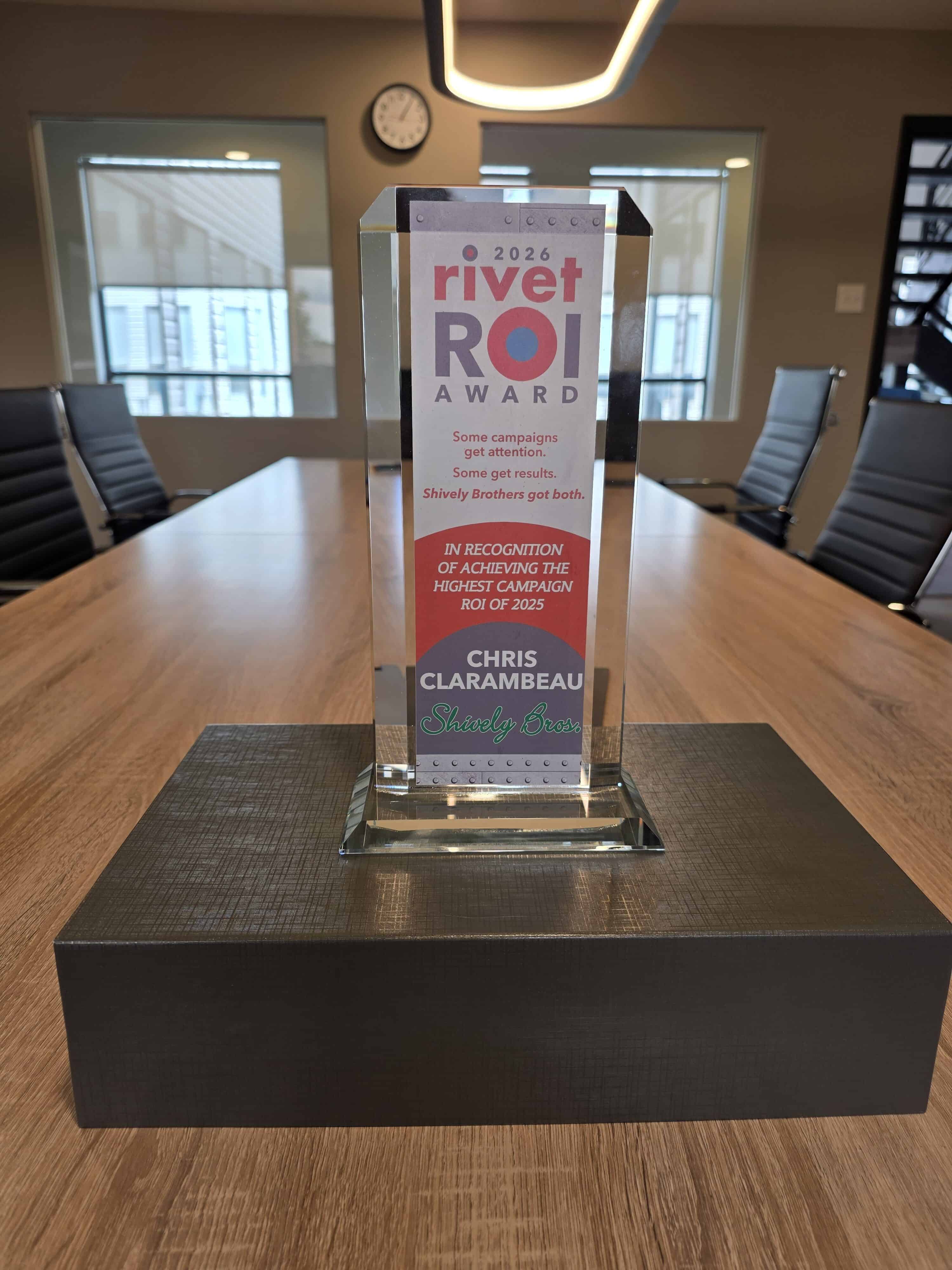
Shively Bros. × 3M PPE
One of the things I value most about distributor marketing is seeing manufacturer resources turned into measurable business.
Shively Bros., an independent distributor, worked with Rivet|MRO on a targeted campaign involving 3M personal protective equipment.
The objective wasn’t simply to “use the co-op.”
The campaign was designed around a business objective:
Generate demand and measurable business from the manufacturer/distributor relationship.
The campaign ultimately produced a sales increase of 57% for Shively Bros. and Shively became the first recipient of the Rivet ROI Award.
That’s the standard we believe distributor marketing should strive toward.
Not: “Did we spend the money?”
But: “What did the money accomplish?”
THE 30-MINUTE CO-OP OPPORTUNITY REVIEW
You may already have more manufacturer marketing resources available than you realize.
Rivet|MRO offers a Free 30-Minute Co-Op Opportunity Review for independent distributors.
We’ll look at:
- Your major manufacturer relationships
- Available marketing resources
- Current co-op programs
- How you’re using those funds today
- Potential gaps and opportunities
- Ways co-op could support your sales priorities
The goal isn’t to sell you a marketing program.
It’s to identify opportunities.
If we find something useful, we’ll talk about it.
If we don’t, you’ll still walk away with a better understanding of your co-op opportunities.
FINAL THOUGHT
Manufacturer co-op isn’t just money. It’s leverage.
When you combine manufacturer resources with your knowledge of your customers, your sales team and your market, you can create marketing programs that benefit everyone involved.
The manufacturer gets greater market penetration. Your sales team gets better tools and opportunities.
Your customers get useful information and solutions. And your business gets the opportunity to grow.
Don’t just spend your co-op. Put it to work.
WANT TO START NOW?
I’ve also written a practical article covering ways independent distributors can identify and claim more manufacturer co-op funds:
10.5 Quick Tips to Help You Claim More Co-op Marketing Funds!
Read the article on Rivet|MRO
ABOUT RIVET|MRO
Marketing Resources Built for Independent Distributors
Rivet|MRO isn’t a traditional marketing agency.
We’re a Marketing Resource Organization (our version of MRO) built specifically for independent distributors.
We help distributors with:
Co-Op Marketing • Marketing Strategy • Lead Generation • Sales Enablement • Digital Marketing • Social Media • Websites • Content • AI • Fractional Marketing Leadership
Our perspective comes from experience on both sides of the manufacturer/distributor relationship.
We’ve worked with manufacturers. We’ve worked inside distribution.
We’ve worked with B2B and industrial companies.
And we’ve spent years helping independent distributors turn marketing into a practical business resource.
The goal is simple:
Help independent distributors compete, market and grow more effectively.
ABOUT TIM RASMUSSEN
Founder | Rivet|MRO
I’ve spent more than 30 years working in marketing, business development and B2B environments—including agencies, manufacturers and distribution.
That experience ultimately led me to build Rivet|MRO around a simple idea:
Independent distributors don’t need another marketing vendor. They need a marketing resource that understands how to drive growth.
That’s what we’re here to provide.
Rivet|MRO
Helping Independent Distributors Grow
Marketing • Co-Op • Sales Enablement • AI
Industrial & MRO • Electrical • Safety • Power Transmission • HVAC • Plumbing • Building Products
Tim Rasmussen
Founder, Rivet|MRO
Schedule Your Free 30-Minute Co-Op Opportunity Review: https://rivetmro.com/book-appointment/