

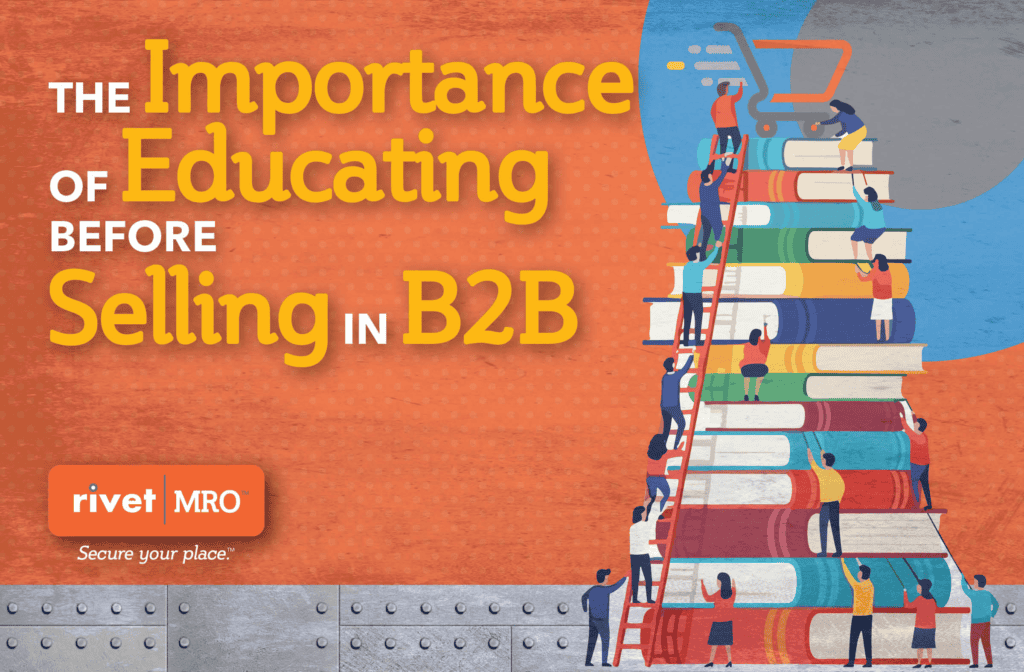
Stop Selling. Start Teaching.
For years, B2B marketing followed a familiar formula: promote products, highlight features, send offers, and hope customers are ready to buy.
The problem? That’s not how most buying decisions happen anymore.
Today’s buyers spend more time researching on their own than ever before. By the time they engage with a salesperson, they’ve likely read articles, watched videos, compared options, and formed opinions about potential suppliers. They’re looking for answers, not advertisements.
That’s why the most effective B2B marketers are shifting their focus from selling to teaching.
Modern Buyers Want Information, Not Interruptions
Think about your own inbox. How many promotional emails do you delete without opening? How many LinkedIn messages get ignored because they’re clearly a sales pitch?
Your customers do the same thing.
The reality is that buyers are overwhelmed with information and underwhelmed by most marketing. Generic promotions, product-heavy messaging, and repetitive sales pitches often get lost in the noise.
What stands out is content that helps people solve problems.
When distributors share practical insights, industry trends, safety guidance, operational best practices, or product application knowledge, they become more than a supplier. They become consultants, problem-solvers, and trusted partners invested in helping customers improve their operations and achieve better outcomes.
And resources earn attention through credibility.

Complex Buying Decisions Require Better Education
Buying decisions have become increasingly complicated.
Research from Gartner found that 77% of B2B buyers describe their most recent purchase as difficult or complex. Most buying decisions involve multiple stakeholders, each bringing different priorities and perspectives to the table.
As a result, purchasing processes are longer, more collaborative, and often subject to change as new information emerges.
This creates an opportunity for distributors and manufacturers willing to educate their audiences.
When buyers are trying to understand a challenge, compare solutions, or build internal consensus, useful content can help move the conversation forward. Educational content provides clarity during a process that is often anything but clear.
Teaching Builds Trust Faster Than Selling
Trust has always been important in distribution. Today, it’s one of the few competitive advantages that cannot be easily replicated.
Educational content helps establish that trust because it demonstrates expertise without demanding an immediate transaction.
It also reinforces the consultative role that independent distributors have long played with their customers. The strongest customer relationships are rarely transactional—they’re partnerships built on expertise, collaboration, and a shared interest in solving problems.
A blog explaining how to select the right safety equipment.
A video showing best practices for preventive maintenance.
A guide comparing different product options for a specific application.
Or a lunch-and-learn event where customers can hear directly from supplier experts, see product demonstrations, ask questions, and learn about new solutions in a hands-on environment. Many distributors host these events at their branches, often pairing supplier representatives with internal product specialists to share practical knowledge. The lunch, giveaways, and prizes may help drive attendance, but the real value is the education and relationship-building that takes place.
These conversations often lead to discussions around process improvements, product applications, and operational challenges—further strengthening the distributor’s role as a partner rather than just a supplier.
These resources help customers make informed decisions. Whether they buy immediately or not, they begin associating your company with valuable expertise.
Over time, that credibility compounds.
When customers consistently learn something useful from your company, you’re more likely to be included when they’re ready to purchase.

Better Content Beats More Content
Many marketers assume success comes from producing more content.
In reality, success comes from producing more useful content.
The goal isn’t to flood inboxes, social feeds, or websites with information. The goal is to help customers answer important questions and make smarter decisions.
That could include:
- Educational blog articles
- Product application guides
- Industry trend updates
- Safety and compliance resources
- Short instructional videos
- Customer success stories backed by real results
- Interactive tools and calculators
The format matters less than the value being delivered.
If your content makes customers smarter, you’re on the right track.

What This Means for Distributors
Independent distributors often compete against larger organizations with bigger marketing budgets.
The good news is that trust isn’t built through budget alone.
It’s built through expertise, relevance, and consistency.
It’s also built through partnership, consultation, and a willingness to share knowledge freely.
Every customer question is a content opportunity. Every product category contains knowledge worth sharing. Every successful customer outcome can become a valuable lesson for others facing similar challenges.
Educational initiatives don’t have to come entirely out of your marketing budget, either. Many suppliers offer co-op and MDF funds that can be used to support activities such as educational content, customer events, product-focused campaigns, videos, social media programs, digital advertising, and lunch-and-learn sessions. The challenge is often knowing what’s available and how to access it.
That’s where programs like Rivet|MRO’s Co-Optimizer can help. By identifying available co-op opportunities and helping distributors maximize supplier funding, educational marketing initiatives can often be launched with little to no out-of-pocket expense.
The distributors who win attention today aren’t necessarily the loudest. They’re the most helpful—and they’re finding ways to make educational marketing a sustainable part of their growth strategy.
The Bottom Line
Modern B2B buyers are teaching themselves long before they speak with a salesperson.
The companies that earn their trust are the ones that help them learn.
When your marketing focuses on educating instead of selling, you create stronger relationships, better conversations, and more qualified opportunities.
Because in B2B, people don’t just buy products.
They buy expertise. They buy confidence. And they buy from partners they trust to help them make the right decisions for their business.
And confidence comes from understanding.