

Inspired by insights from Lara Varrica, Senior Account Manager at Vonnimedia
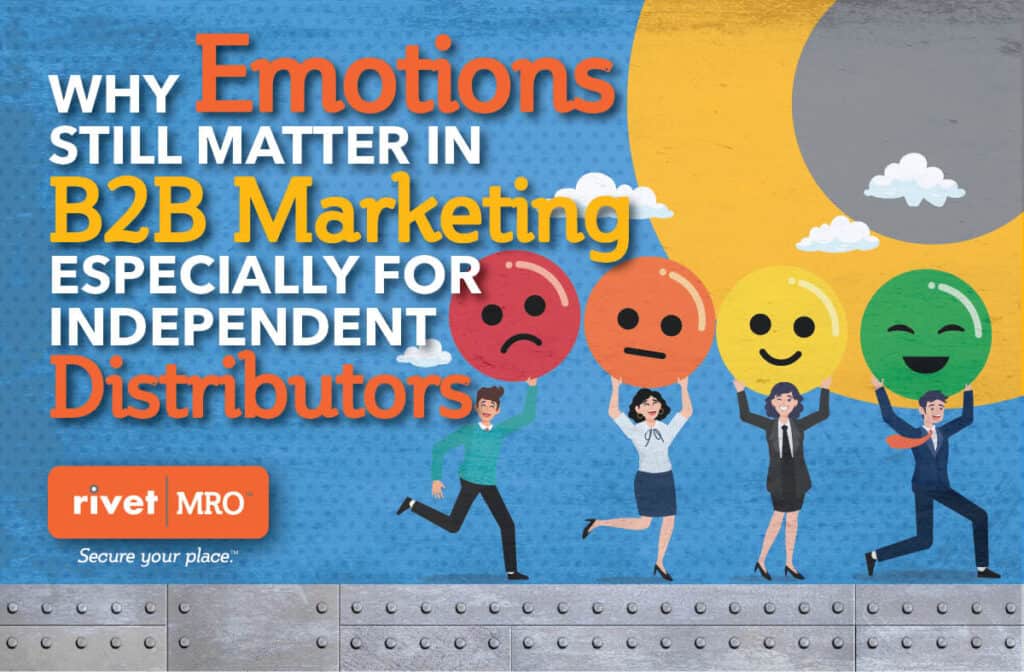
Industrial distribution has always viewed purchasing decisions as logical exercises. Products either meet specifications or they don’t. Lead times are either acceptable or they aren’t. Pricing, availability, and technical performance tend to dominate conversations, which makes it easy to assume that emotion has little place in B2B marketing.
Yet recent commentary from Lara Varrica highlights something many distributors already experience firsthand but rarely frame this way: even the most rational business decisions are still made by people managing risk, responsibility, and reputation inside their organizations.
For independent distributors, understanding this distinction is becoming increasingly important.
The Reality Behind Distributor Buying Decisions
When a customer selects a distributor, the decision rarely comes down to product alone. Most distributors serve overlapping territories, represent many of the same manufacturers, and offer comparable access to inventory. From a purely logical standpoint, differentiation can appear minimal.
What often determines the outcome is confidence in the supplier relationship.
Maintenance teams choose distributors they trust to respond when production is down. Contractors rely on partners who simplify procurement rather than complicate it. Purchasing managers gravitate toward suppliers who consistently help them avoid problems before they occur.
These decisions are supported by logic, but they are influenced by experience and familiarity developed over time. Buyers are not only evaluating capability; they are assessing reliability and reducing uncertainty.

Where Distributor Marketing Often Falls Short
Many independent distributors unintentionally market themselves as interchangeable suppliers. Websites emphasize product categories, line cards, and technical features without clearly communicating how those capabilities translate into operational value for customers.
The result is marketing that explains what a distributor sells but not why working with that distributor feels different.
Varrica’s central point applies directly here. Effective B2B marketing does more than present information. It reassures buyers that they are making a safe and informed decision. In distribution, where downtime, project delays, and cost overruns carry real consequences, that reassurance matters.
Customers want to know their supplier understands the pressures they face long before a quote request is submitted.
Emotion in Distribution Doesn’t Look Like Consumer Marketing
In B2B environments, emotion is often misunderstood as branding personality or advertising creativity. In reality, it shows up in more practical ways.
It appears when customers believe a distributor understands their operation. It develops when communication is clear and consistent. It grows when past performance removes hesitation from future purchasing decisions.
Independent distributors already build these connections through service and expertise. The challenge is ensuring marketing reflects those strengths rather than defaulting to product-focused messaging alone.
Content as a Differentiator for Independents
As buying processes become more complex and competition expands beyond local markets, content increasingly plays a role in shaping perception before sales teams engage directly.
Case studies that explain how challenges were solved carry more weight than lists of capabilities. Educational content that reflects industry realities positions distributors as knowledgeable partners rather than transactional vendors. Even routine communication, when grounded in customer understanding, reinforces credibility.
This balance between logic and human understanding allows independent distributors to compete effectively against larger organizations with greater marketing resources.

Why This Matters Now
Customers today face longer approval processes and increased accountability for purchasing decisions. Choosing the wrong supplier carries operational and financial consequences, which places greater emphasis on trust and predictability.
Distributors who communicate both competence and understanding reduce perceived risk for buyers. Over time, that trust strengthens loyalty and shortens future decision cycles.
The distributors seeing sustained growth are rarely those making the loudest claims. More often, they are the ones whose messaging consistently reflects how well they understand the industries they serve.
The Rivet Perspective
At Rivet|MRO, we frequently see independent distributors undersell one of their greatest advantages. Local expertise, responsive service, and long-standing customer relationships already create strong emotional alignment with customers. The opportunity lies in translating those everyday experiences into marketing that communicates value before the first interaction occurs.
Data and performance metrics remain essential. They validate outcomes and demonstrate capability. But customers ultimately choose partners they believe will make their jobs easier and their decisions safer.
In distribution, emotion does not replace logic. It reinforces it.
And for independent distributors competing in increasingly crowded markets, that combination often becomes the deciding factor.
Source:
https://www.adnews.com.au/opinion/why-b2b-brands-need-emotion-as-much-as-logic